What You'll Learn
Each guide covers a distinct form of incense, from the simplest to the most refined.
Getting Started
Essential tools, workspace setup, and the fundamental techniques every incense maker needs to know: grinding, sifting, and blending.
Ingredients Guide
An encyclopedia of resins, woods, herbs, and spices. Learn scent profiles, note classifications, and how each material behaves when heated.
Loose Incense
The foundation of the craft. Blend granular aromatics to burn on charcoal or an incense stove, the oldest and most direct method.
Sticks & Cones
Shape your blends into self-burning sticks and cones using natural binders. Fine-powder technique, dipping, rolling, and drying.
Neri-Koh
The refined Japanese art of kneaded incense. Honey-bound aromatic balls that mature over months, gently warmed on buried coals.
World Recipes
Traditional blends from Egypt, Greece, Arabia, India, Tibet, Japan, and the Americas, each with history and detailed instructions.
A Craft Spanning Continents and Millennia
Incense is one of humanity's oldest crafts. The word itself comes from the Latin incendere, "to burn." But the practice predates the word by thousands of years. Ancient Egyptians burned Kyphi, a complex blend of sixteen ingredients, at sunset as an offering to Ra. The Babylonians burned cedarwood and cypress during prayer. In China, incense culture developed into an elaborate system of blending, with texts recording hundreds of formulas.
By the Heian period (794–1185 CE), Japanese aristocrats had elevated incense blending into a refined art called kodo, "the way of fragrance." Courtiers would compete in incense-guessing games, and personal blends became as distinctive as a signature. The kneaded incense balls they created, neri-koh, were sealed in ceramic jars and buried underground to mature, sometimes for years.
Meanwhile, across the Indian subcontinent, incense was central to both temple ritual and Ayurvedic medicine. The use of sandalwood, guggul resin, and aromatic herbs formed the basis of a tradition that still thrives today. In the Americas, indigenous peoples burned copal, sage, sweetgrass, and cedar in ceremonies of purification and prayer.
What unites all these traditions is a shared understanding: that certain natural materials, when heated, release something more than smoke. They release memory, intention, atmosphere. This guide draws from all of these traditions to teach you the practical techniques of the craft.
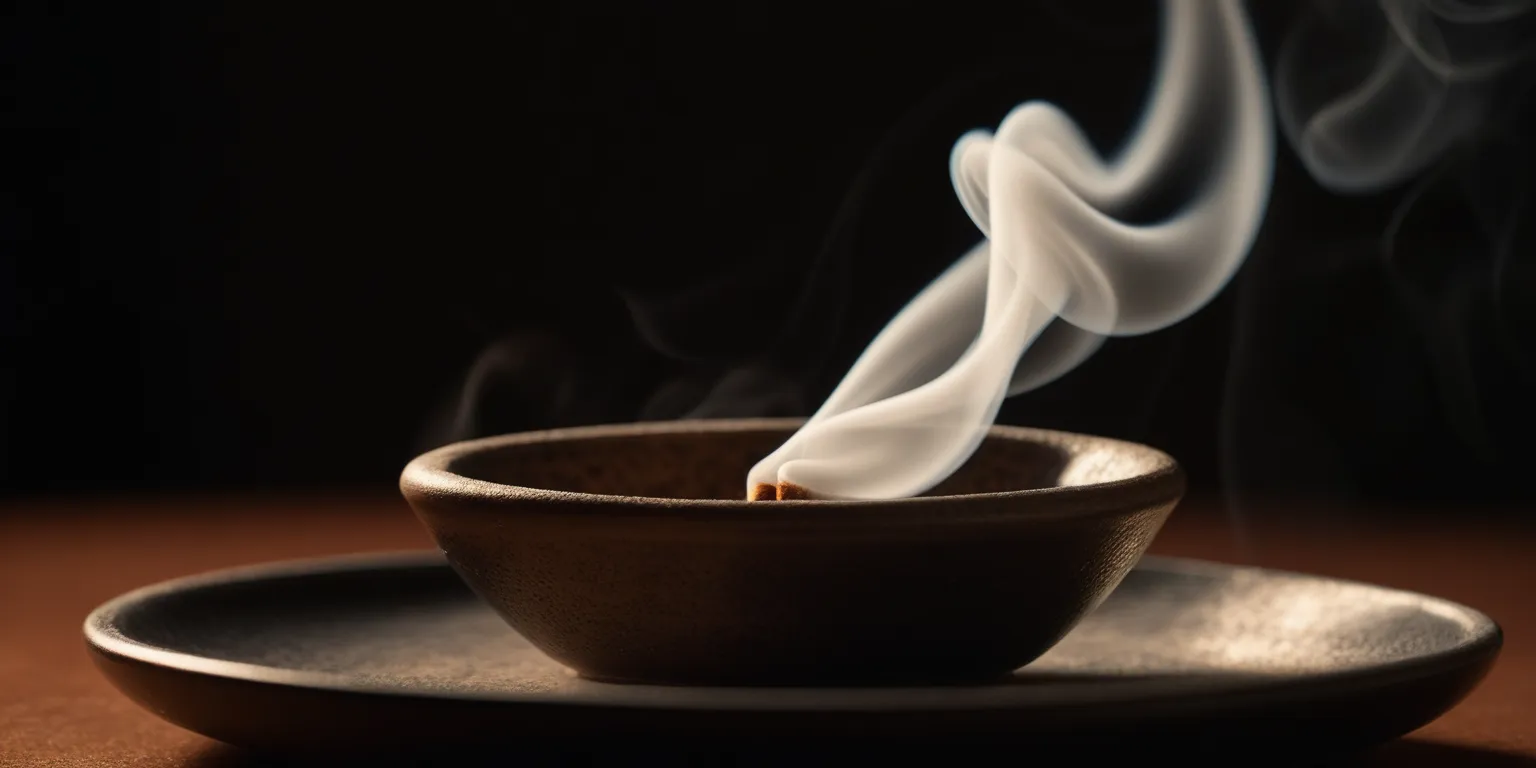
From Simple Blends to Refined Art
Whether you begin with a handful of resin on charcoal or aspire to the kneaded incense balls of Heian-era Japan, the journey starts with the same foundation: quality ingredients, careful technique, and patience.
How This Guide Is Organized
Start with Loose Incense
If you're new to incense making, begin with loose incense. It requires the fewest tools, forgives imprecise measurements, and lets you learn how different ingredients smell when heated. You'll use a mortar and pestle to grind ingredients to a coarse granular texture, blend them, and burn the mixture on charcoal.
Then Try Kneaded Incense
Neri-koh is a natural next step. You'll learn to bind powdered ingredients with honey or dried plum flesh, pound them into a paste, and form them into small balls that improve with age. It's a meditative, rewarding process that connects you directly to a thousand-year-old Japanese tradition.
Graduate to Sticks & Cones
Sticks and cones demand the most precision. Ingredients must be ground to a very fine powder, and you'll need to master the use of natural binders like makko (tabu no ki bark) to create a self-burning product. But the satisfaction of lighting your own handmade incense stick is hard to beat.
Core Principles
Across every tradition and technique, a few principles hold true:
- Quality ingredients matter. There is no technique that compensates for poor materials. Seek out reputable suppliers of genuine resins, woods, and botanicals.
- Measure twice. Ingredients change volume when ground. Measure whole, grind, then re-measure to maintain accurate ratios.
- Patience is an ingredient. Almost every form of incense improves with aging. The scent profile deepens and the individual notes merge into something more complex and coherent.
- Your nose is the final authority. Recipes are starting points. Adjust ratios based on what you smell, not just what the recipe says. Developing your nose is the most important skill in incense making.
- Record everything. Keep a notebook. Write down every recipe, every ratio, every observation. You will forget what worked, and you will want to reproduce your best blends.